
Crawled — Currently Not Indexed — What It Means and How to Fix It

“Crawled – currently not indexed” means Googlebot fetched your page, found nothing blocking it, and decided not to add it to Google’s index — at least for now.
DIY SEMRUSH Audit vs. Hiring an Expert: What You’re Missing by Going Alone
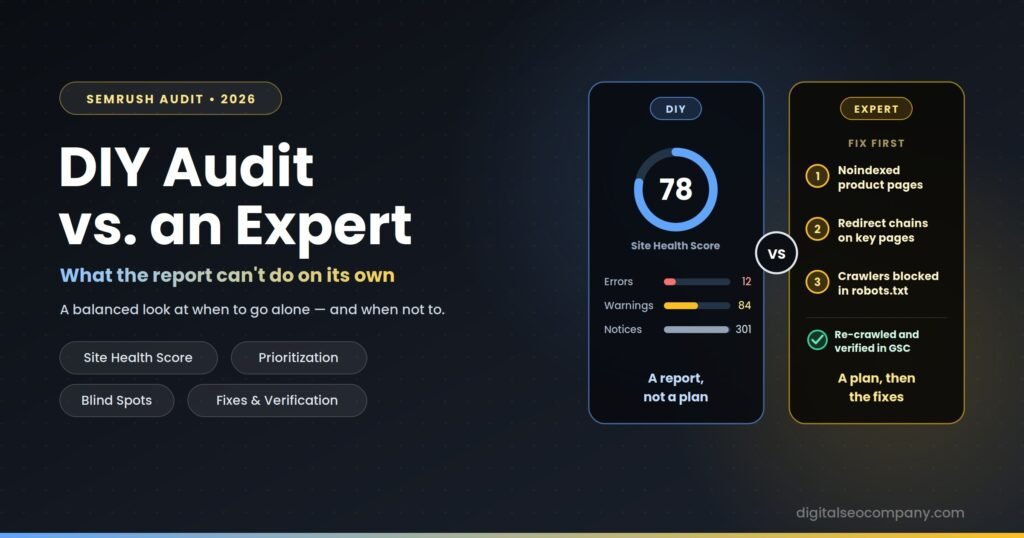
A DIY Semrush audit is a legitimate way to find technical SEO problems, and for a small, simple website it may be all you need. What the tool can’t do on its own is decide which of the issues it flags actually matter for your business, see what a crawler is blind to, or fix anything.
How to Fix Sitemap Errors on WordPress (Yoast, Rank Math, Manual)
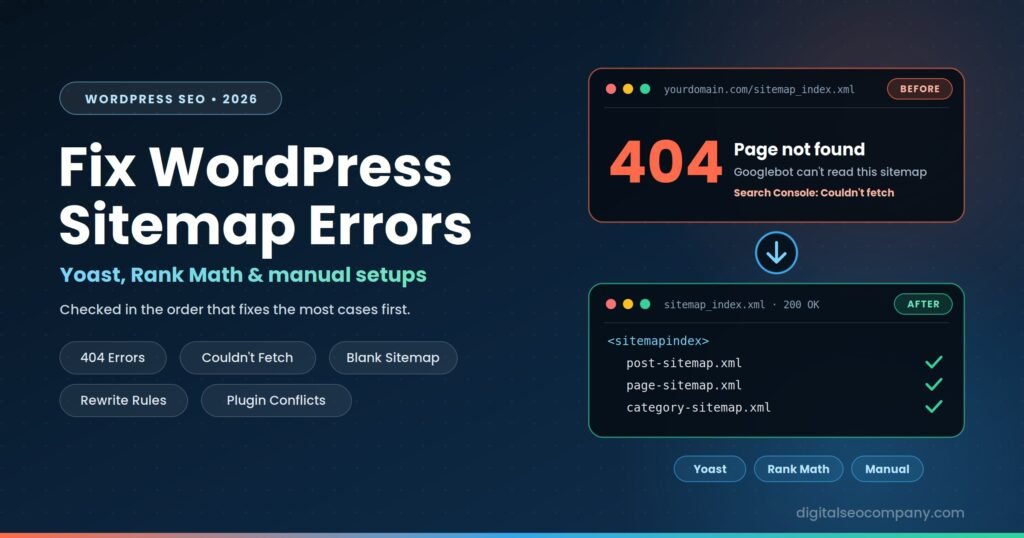
Most WordPress sitemap errors come from a short list of causes: stale rewrite rules, two SEO plugins competing for the same sitemap URL, a leftover static sitemap file, the sitemap feature switched off, a cache or firewall serving Googlebot the wrong thing, or stray output corrupting the XML.
GEO for Startups: A Practical Roadmap on a Limited Budget

For a startup, generative engine optimization (GEO) comes down to one job: giving AI systems enough consistent, verifiable evidence that your company exists, what it does, and who it’s for — so they can recommend you when a buyer asks.
robots.txt vs. llms.txt: What Each File Actually Does (And When You Need Each)

robots.txt is an access-control file: it tells crawlers which parts of your site they may or may not fetch, and every major search and AI crawler honors it. llms.txt is a proposed content-guidance file: a Markdown list of your most important pages, meant to help AI systems read your site efficiently — but as of 2026, no major AI provider has committed to using it, and server-log studies show AI crawlers almost never request it.
AI Local SEO vs. Traditional Local SEO: What Actually Changes

Traditional local SEO optimizes for Google’s Map Pack using proximity, Google Business Profile completeness, and reviews. AI local SEO optimizes for being named inside a synthesized answer — from ChatGPT, Perplexity, Gemini, or Google’s own AI Overviews — and the biggest difference most businesses miss is that these AI systems don’t all read from the same data.
AI Search Optimization vs. GEO vs. AEO: How These Terms Actually Relate
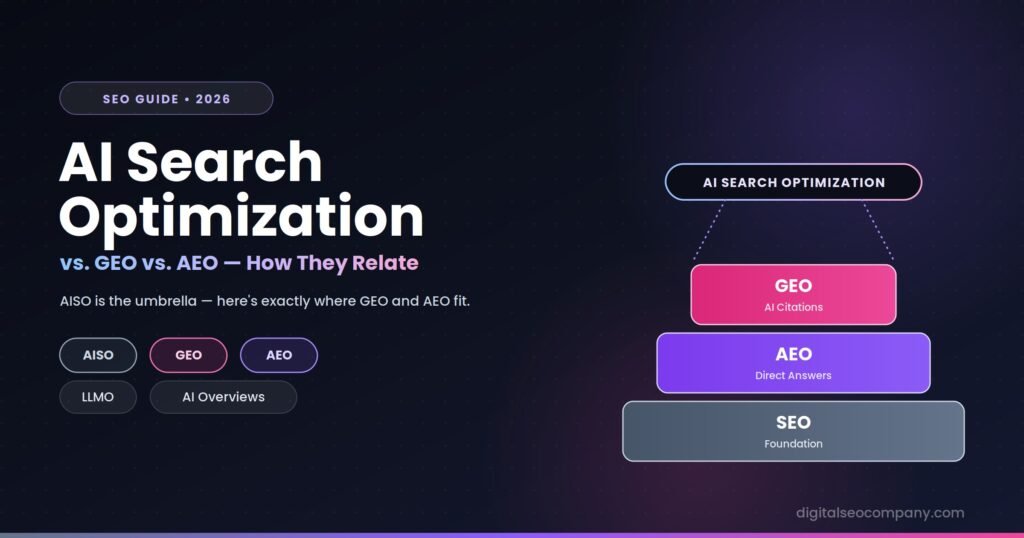
AI Search Optimization is the umbrella term for making a brand visible inside AI-generated answers — across ChatGPT, Gemini, Claude, Perplexity, Copilot, and Google’s AI Overviews — while GEO and AEO are more specific disciplines that sit underneath it, not separate categories competing with it.
Local Business Schema Markup: Complete Setup Guide (Sept 2026)
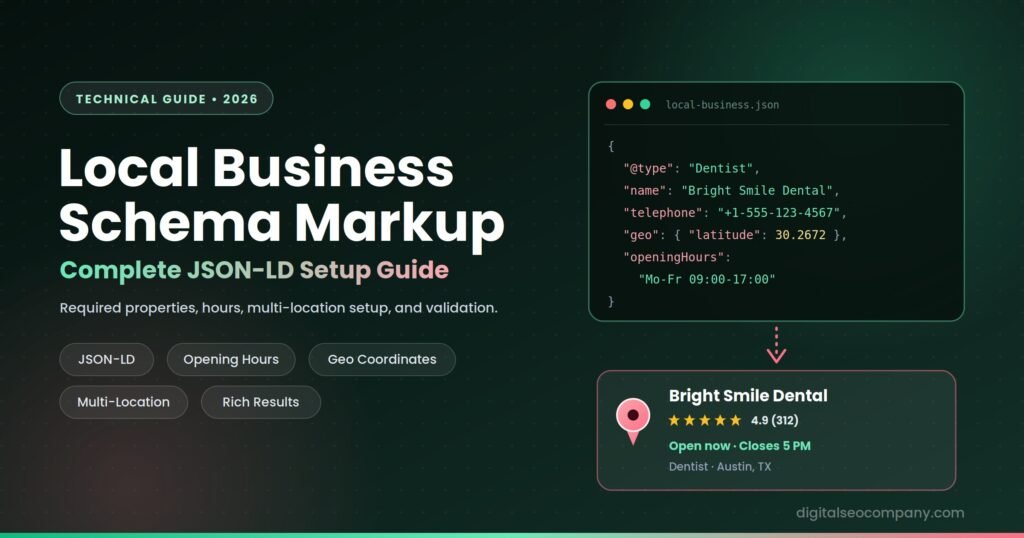
LocalBusiness schema is structured data, written in JSON-LD, that tells Google and AI search systems exactly what your business is, where it’s located, when it’s open, and how customers reach you — in a machine-readable format rather than text they have to infer.
“Discovered — Currently Not Indexed”: What It Means and How to Fix It
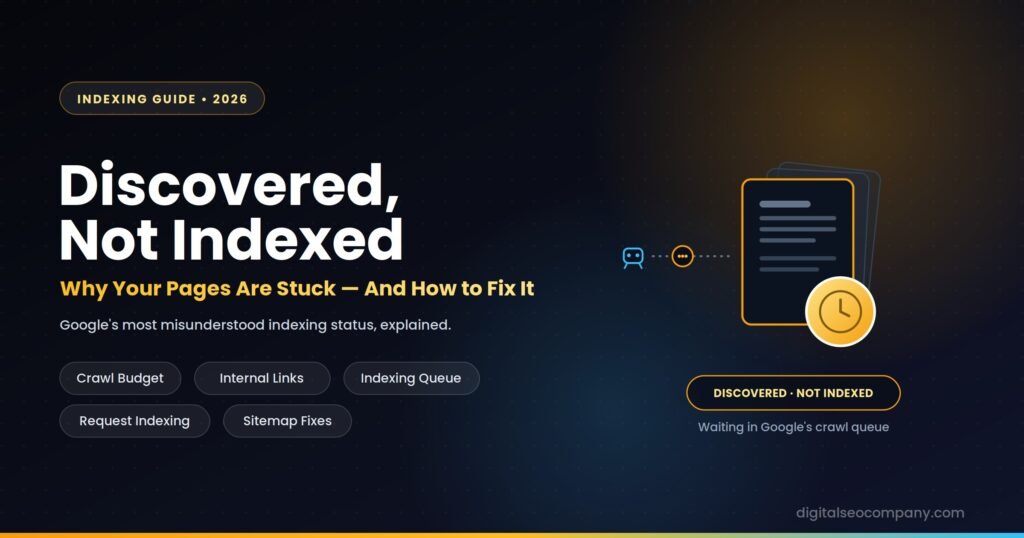
“Discovered — currently not indexed” is a status in Google Search Console meaning Google knows a URL exists — usually from your sitemap or a link — but hasn’t crawled or indexed it yet. It’s not a penalty and it’s not an error in the traditional sense; it’s a queue state. The page is waiting, and Google hasn’t decided it’s worth the crawl budget to actually visit it right now.
Semrush vs. Screaming Frog vs. Ahrefs: Which Audit Tool Is Best?
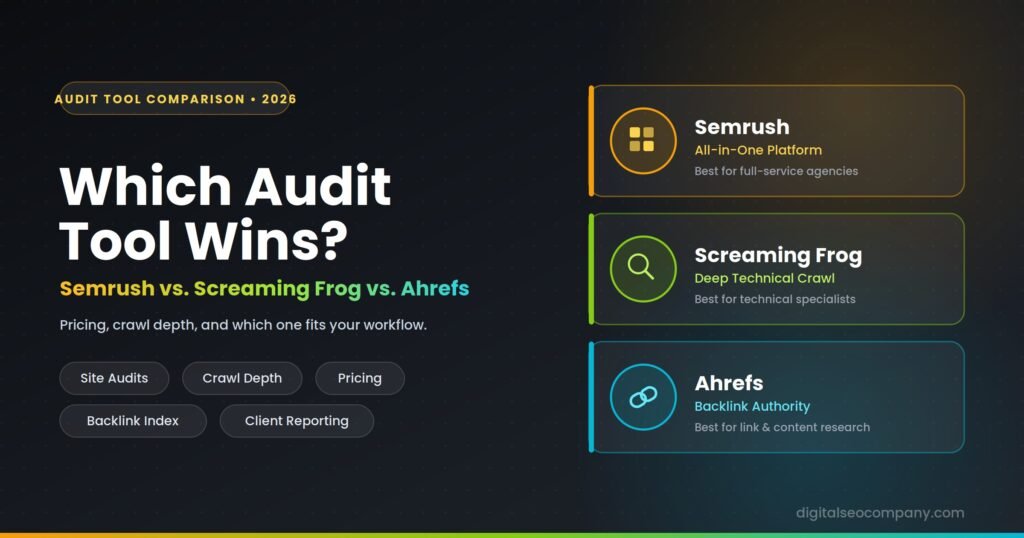
Semrush, Screaming Frog, and Ahrefs are the three most-used SEO audit tools in 2026, but they’re built for different jobs: Semrush is an all-in-one cloud platform that pairs technical audits with keyword and competitive data, Screaming Frog is a desktop crawler built purely for deep technical audits at the lowest cost, and Ahrefs is a cloud platform built around the industry’s strongest backlink index, with a technical audit layered on top.